Farewellspheres-Archive –A practice-based design research experiment on the creation of atmospheres in viewing rooms (spaces of the laid-out dead)
Subproject dissertation
Andrea Jäggi, PhD Candidate
Trends & Identity
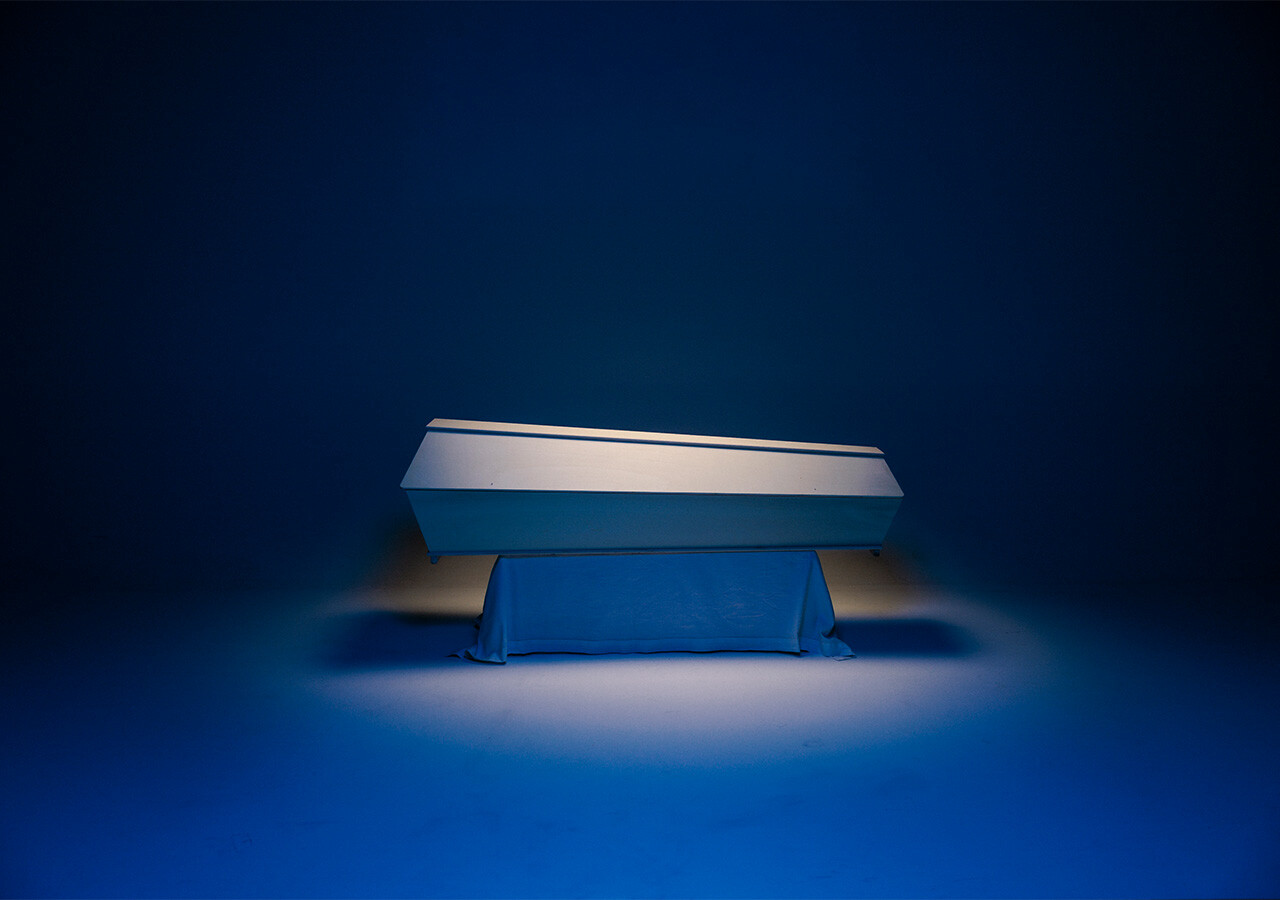
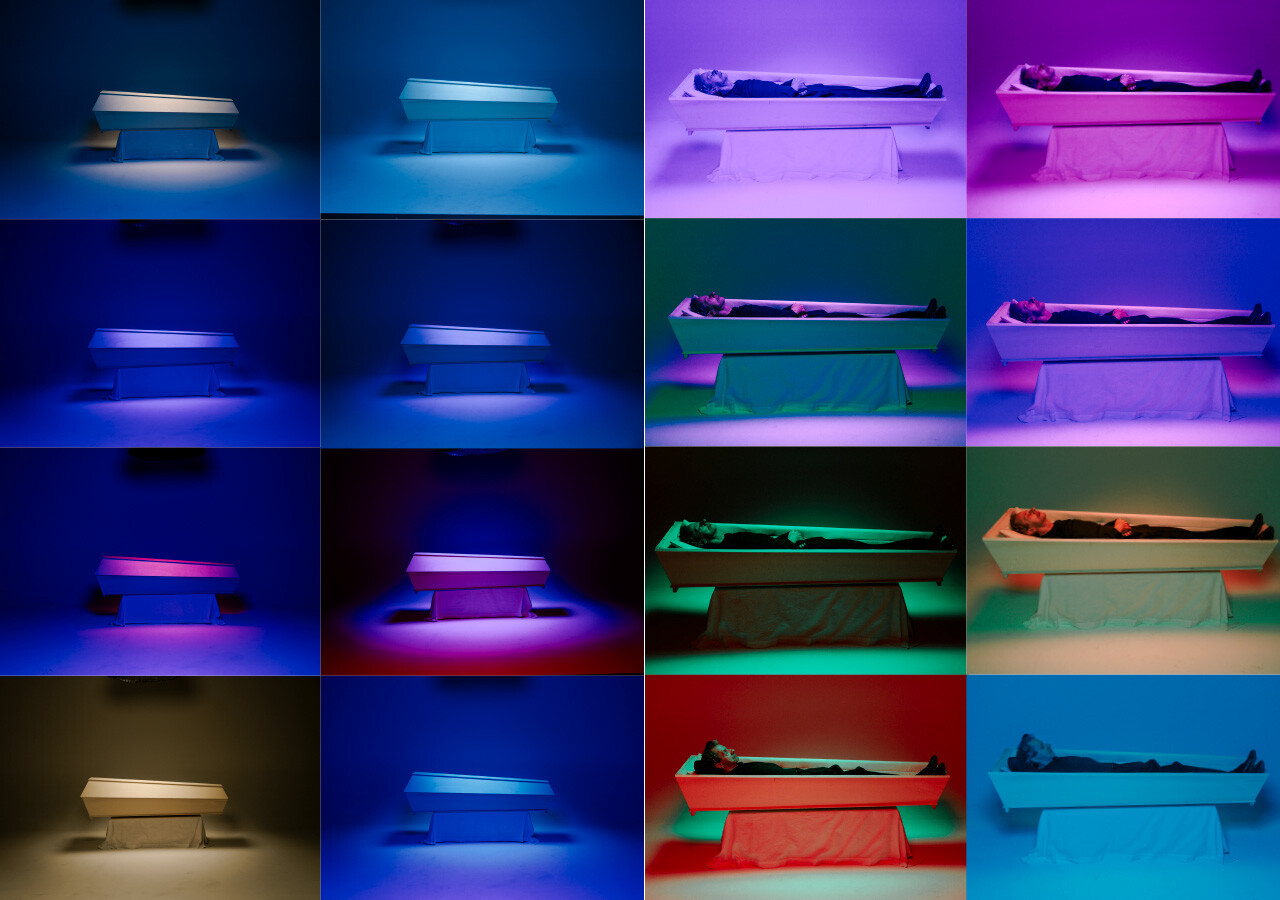
The Farewell Spheres Test Room is a sub-project of the doctoral dissertation by Andrea Jäggi (PhD Trends & Identity) and investigates how light and coffin positioning, as atmospheric generators, influence the perception of death and mourning in viewing rooms. Through experimental spatial settings, design-related, sensory–corporeal, and affective dimensions are explored with the aim of transferring design knowledge back into practice and developing appropriate farewell spheres.
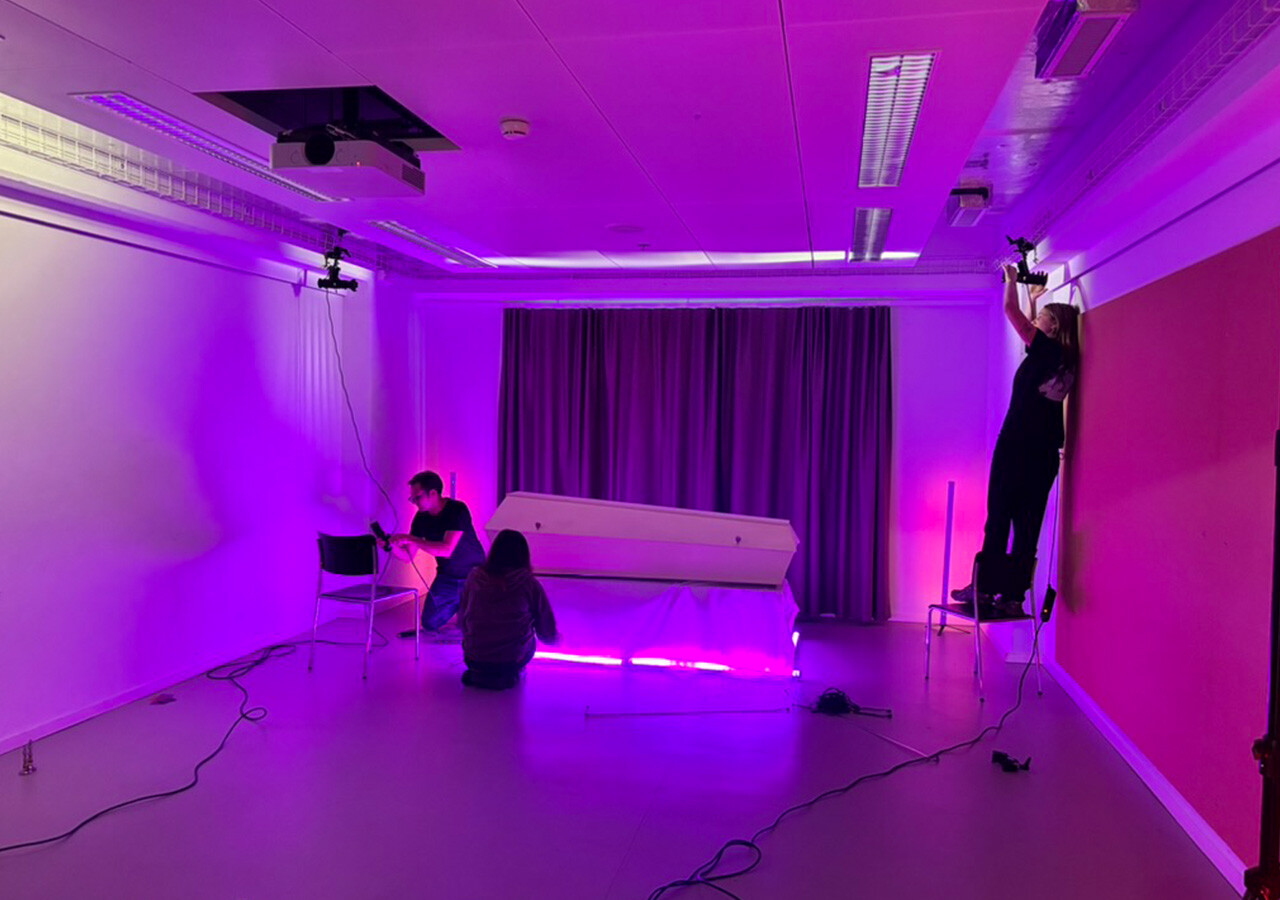
The Farewell Spheres Test Room project constitutes the applied component of the ongoing dissertation by Andrea Jäggi (Farewell Spheres, Department of Trends & Identity). Within the PhD research project, the study examines how the design of viewing rooms and their atmosphere (Böhme, 1995) influence the perception and experience of death and mourning. A transdisciplinary approach is pursued, combining cultural studies and design research methods with artistic practice (experiment) and the applicant’s professional experience as a funeral director. Within the applied research, design interventions from the fields of architecture, interior design, lighting, sound and color design, as well as thanatology, are experimentally tested in the (viewing) space with bereaved participants in terms of their affective impact. The aim is to transfer design knowledge back into practice, where the creation of appropriate farewell spheres can contribute to supporting mourners in their grieving process.
At the core of the Farewell Spheres Test Room project is the focused investigation of two key atmospheric generators (cf. Caneppa & Condia, 2022, p. 36): light and the corpse or coffin. The study asks how (1) different lighting conditions and (2) different coffin positions within viewing rooms affect the atmospheric spatial experience of the moment of farewell. For the investigation of farewell spheres, it is essential that recipients are physically present within them (cf. Böhme, 2013, p. 15). The constructed settings are entered individually by members of the test group. Prior to entering, participants are asked to focus on their overall atmospheric experience. Participants enter the room one at a time; after entry, the door is closed. They may freely decide how long they wish to remain in the space. Following the walkthrough, questions such as: How do I feel? How does the room feel? What, if anything, is disturbing? What do I miss? etc., are collected via a survey. Of particular importance is the subsequent verbal exchange within the group during a shared re-visiting of the settings, which is documented by the applicant through audio recordings. It has been shown that the verbal narration of atmospheric experience (hermeneutic atmography) constitutes an effective form of documentation (cf. Mutzbauer, 2021, p. 240). Test runs have already demonstrated that this procedure can generate significant insights into shared atmospheric experiences, which can then be translated into strategies or recommendations for design practice. The audio recordings are transcribed and selectively coded and analyzed following Grounded Theory.